Are you worried about losing your job to AI? It’s not an unwarranted fear.
But allow me to soothe your anxiety by taking you on a journey spanning 2500 years of human history. From the Ancient Greeks to 16th century golems, let’s explore the automation of labor, the evolution of side-hustles and the role agents will play as economic actors.
We'll look at what these agents can actually do, who stands to benefit, and what it means when income fully decouples from labor. We’ll be left with a question that no amount of technical capability can answer: when the machines can work, pay, and profit autonomously, what becomes of the human role in an economy that no longer needs us?
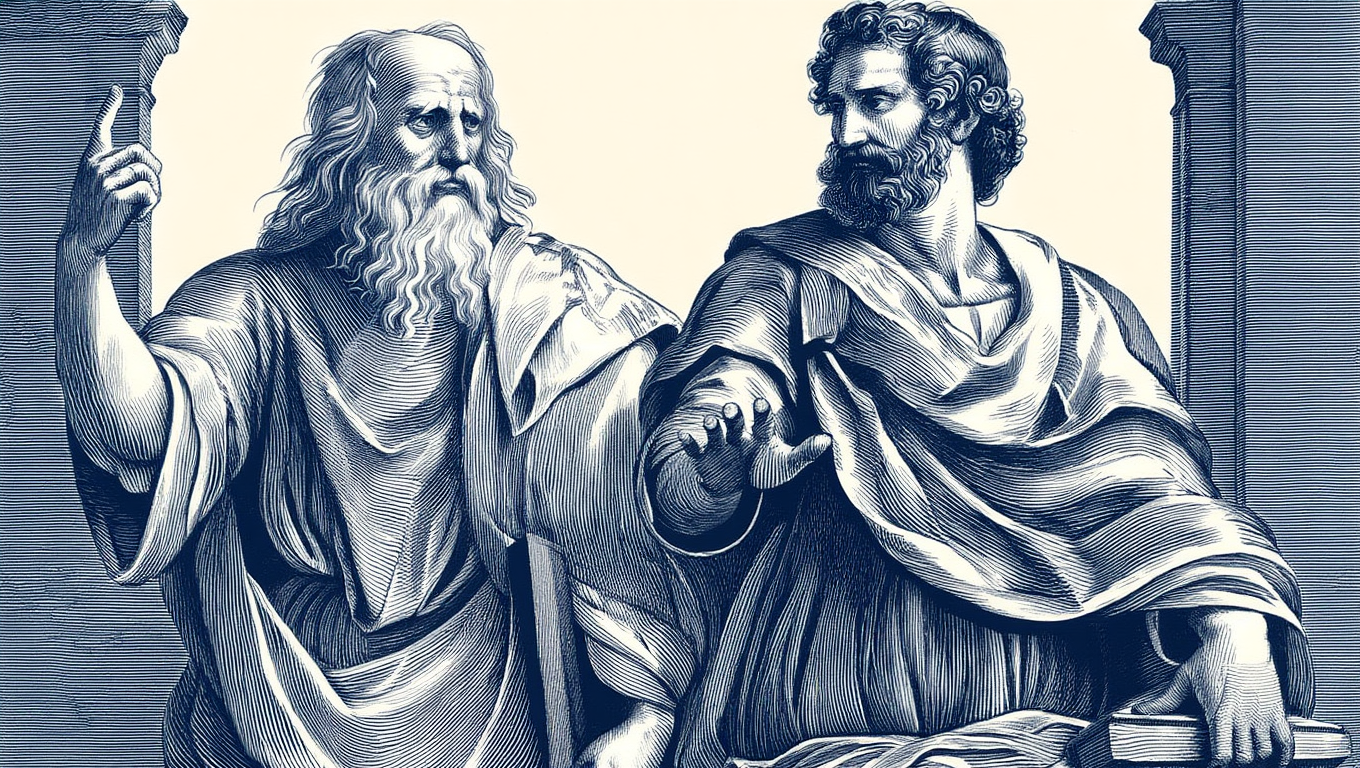 Plato and Aristotle in Raphael's 1509 fresco, The School of Athens
Writing in 350 B.C., Aristotle poses a thought experiment in Politics:
"If every tool, when ordered, or even of its own accord, could do the work that befits it [...] then there would be no need either of apprentices for the master workers, or of slaves for the lords".
He means this to be an impossibility – that slavery is inevitable, because tools can never work autonomously. Twenty-four centuries later, we're building exactly the 'if' that he describes.
Humans have always wanted "passive income." Money that arrives while you sleep, compounds without your attention. Freedom from trading time for wealth. Every generation has found a new vehicle for this dream:
- Stockpiling crops
- Real estate
- Dividends
- Royalties
- Internet businesses
But none of these vehicles can be said to run truly in "passive". They all require the fuel of human labour:
- Crops must be harvested
- Rental properties crumble without management
- Dividend portfolios need rebalancing
- Automated online businesses require constant tweaking, customer service, ad optimisation, and content creation
It might seem that with more work, such ventures come ever closer to a money-making peace of mind, but, in truth, their "passivity" is asymptotic - you can approach it but will never quite arrive.
The passively profitable business people dream of has never been technologically available. To return to Aristotle's impossible tool, it must be:
- Something that works of its own accord,
- does the work that befits it,
- and never asks for anything in return.
AI Agents are these impossible tools. I'll explain the tech that qualifies them for the role in more detail, but first I'd like to discuss their user appeal.
The Golem of Prague
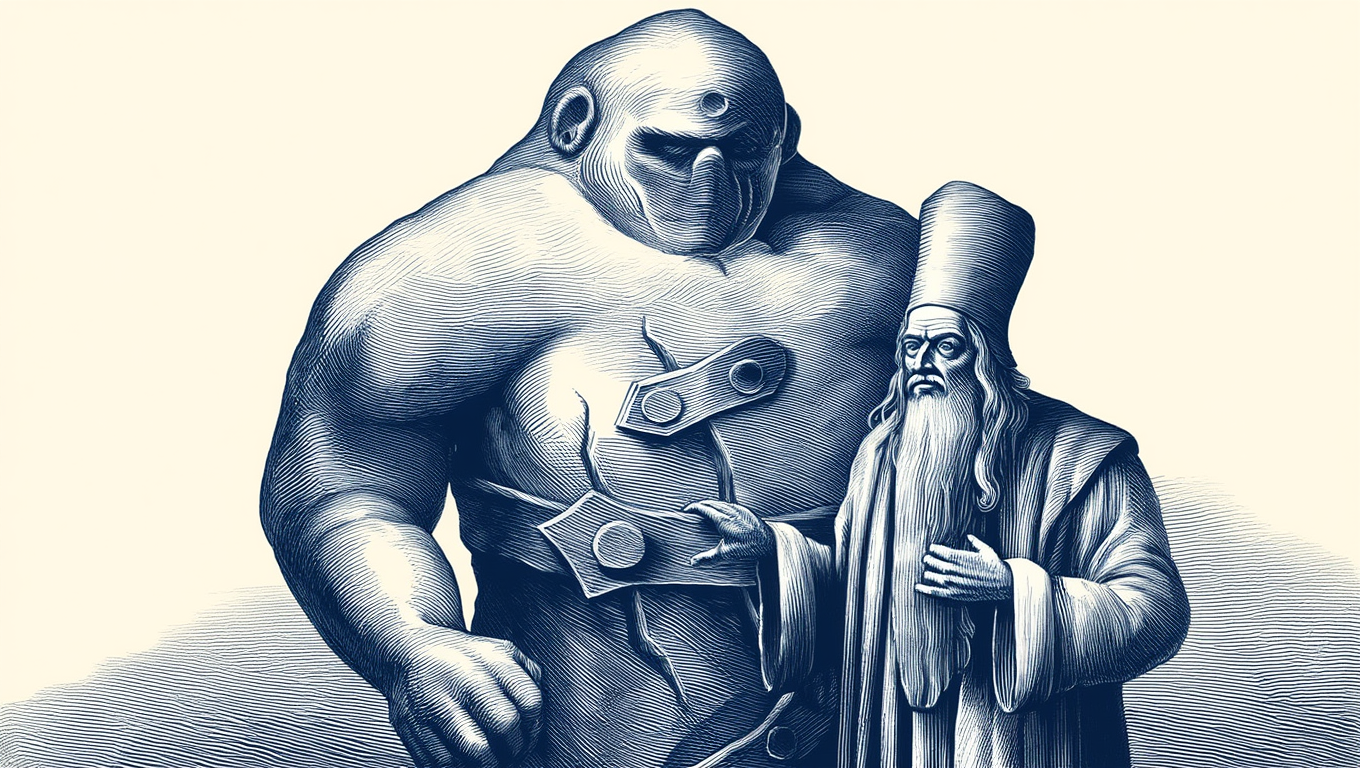 Miloslav Dvořak, “Le Golem et Rabbi Loew près de Prague” (1951), oil on canvas
According to folklore, the late-16th-century Rabbi Loew of Prague shaped a figure from clay and breathed life into it. This “Golem” would protect the community, perform endless labour, follow instructions without complaint. It was a fantasy born out of desperation – a people dreaming of a tireless protector and servant, because they had no other options.
In the 21st-century, traditional employment is increasingly precarious. AI is coming for knowledge work. The side hustles that worked five years ago are saturated. "Just invest and wait" doesn't compute when you can neither afford to invest nor wait.
A generation is reaching for their “Golem”, because traditional pathways are closing.
Simultaneously, the barrier to deploying AI agents is collapsing. A year ago, building an autonomous agent required serious engineering talent. Today, you can spin one up with a few API calls and some prompt engineering. A year from now, you'll be able to describe what you want in plain English and have a working agent in minutes.
What we need to witness is desperation meeting capability. For a generation locked out of traditional wealth-building to be handed a tool that can build wealth autonomously.
But desire alone doesn't create adoption. Technologically, something has to break the mould. What might it take for the clay to come to life?
Historical templates for financial escape
 Tupperware party, 1960s
Every few years, the economy produces a new template for financial escape.
In 1951, Brownie Wise convinced women across America that they could build financial independence from their living rooms without a storefront or boss, armed with just Tupperware and a sales pitch. It was the original side hustle, and it worked until everyone was doing it.
More recently, new templates have emerged.
- Dropshipping.
- Amazon FBA.
- Print-on-demand.
- Affiliate marketing.
- Course creation.
Each one follows the same arc: early adopters make life-changing money, gurus emerge to sell the playbook, thousands pile in, margins compress, the window closes. Then something new appears.
I don't know how to run a dropshipping store. I never learned to arbitrage products on Alibaba or spam Facebook ads for supplements. But I am absolutely certain that the next (and possibly final) wave of "escape the 9-5" side hustles won't require you to ship anything at all.
Because the hustle is about to automate itself.
The ATM Moment
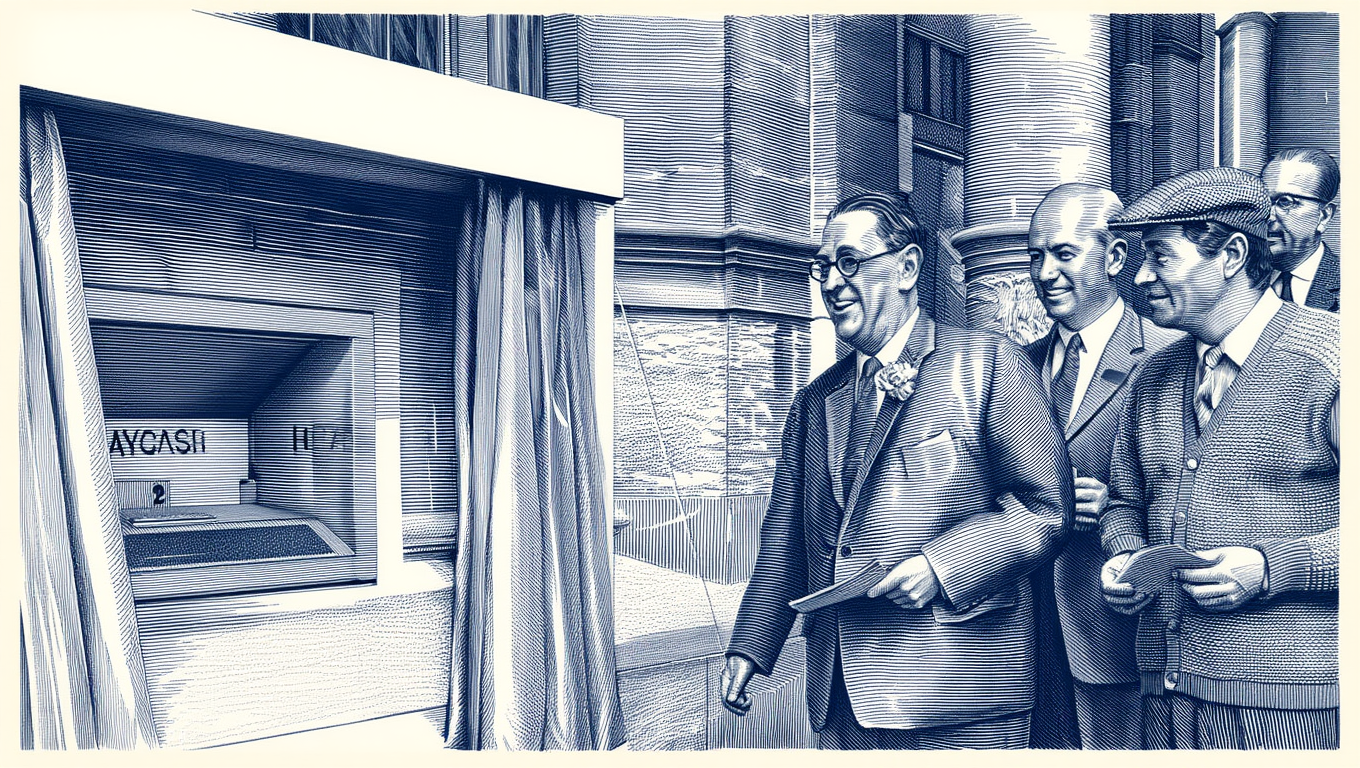 Reg Varney becomes the first person to use a cash machine, London (1967)
AI agents are learning how to use the internet.
Not AI to help you write an email or chatbots that answer customer service questions. Actual autonomous software that can browse websites, fill out forms, make purchases, negotiate prices, and execute multi-step tasks without any human intervention.
- Open AI’s Operator.
- Anthropic’s Claude ‘computer use tool’.
- Google’s Project Mariner.
Every major lab is racing to build agents that can progress from cognition to action. The gap between “thinking-AI” and “doing-AI” is closing fast.
But here’s the thing nobody’s talking about: for agents to act, they need wallets that can pay. Let’s jump forward from the Tupperware parties of the 50s into the 60s: in 1967, Barclays unveiled the first ATM in North London. Before that moment, every cash withdrawal required a human teller.
The ATM created a new category of transaction - machine-to-human, no intermediary. AI agents need their own ATM moment, because right now, an AI that browses Amazon still requires a human to verify payment at checkout. The moment agents can, without our assistance, hold funds and authorise transactions to settle payment, they graduate from tools to economic actors.
We’re not there yet. Almost, but not quite. The infrastructure is being built as you read this: crypto rails sans human signatures, payment APIs designed for machine-to-machine transactions, custody solutions that let software earn money.
When these pieces click together – most likely within 18 months – we will see the emergence of something genuinely new: businesses that run themselves. Less “passive income” in the guru sense of the word, where you will spend 40 hours a week “building systems”, more actual autonomy. Actual passivity. Software that wakes up, finds opportunities, executes transactions and deposits profit, all while you sleep.
The Red Queen's Treadmill
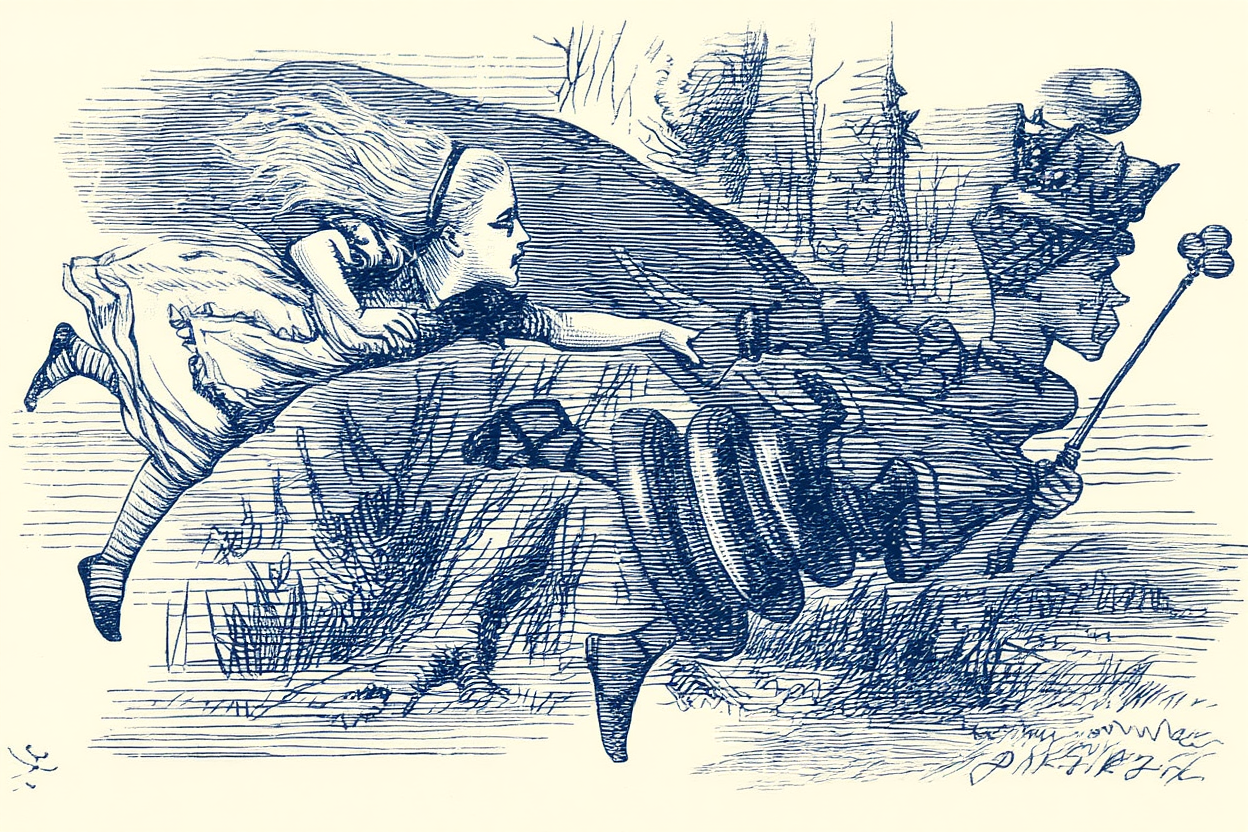 The Red Queen & Alice, taken from Through the Looking-Glass (1871)
The side hustle used to be a simple deal of trading time and ingenuity for income. Start by learning a skill the market hasn't fully priced. Then arbitrage attention, information, or logistics before others catch on. Keep grinding until you hit escape velocity or burn out.
That deal is getting worse. In Lewis Carroll’s Through the Looking-Glass, the Red Queen tells Alice that in her kingdom,
"it takes all the running you can do, to keep in the same place."
She may as well have been describing dropshipping in 2024. Every side hustle eventually drowns in competition. Margins went from 40% to 4%. Amazon FBA got swallowed by aggregators with cheaper capital, and the course creators who made millions are now competing with free YouTube tutorials and AI that can generate the same content in seconds.
The Red Queen’s claim is the basis of Van Valen’s 'law of evolution' (1973), which posits the necessity of species’ adaptation and evolution for survival in the face of evolving existential threats.
Our side hustles need to evolve similarly. To stay on the money-making treadmill, we need to adapt the very fabric of the businesses we run – we need to differentiate and specialise.
The Mercantile Network
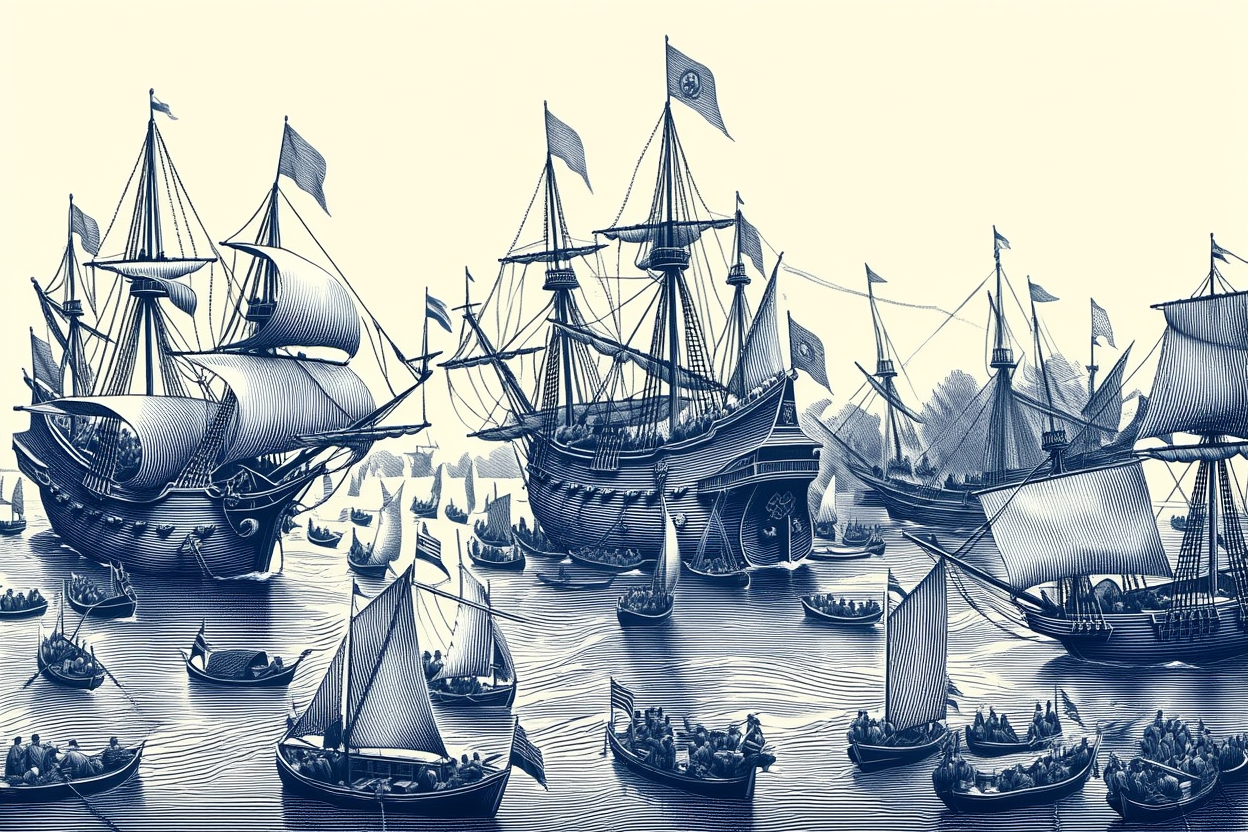 The Return to Amsterdam of the Second Expedition to the East Indies, Hendrick Cornelisz Vroom, 1599 (oil on canvas)
In 1602, the Dutch East India Company deployed a network of trading posts across Asia that could operate autonomously.
Each post negotiated prices, executed trades, and managed inventory without waiting for instructions from Amsterdam. A ship might take eight months to deliver new orders. The outposts couldn't wait. So, the company gave them authority to act, setting strategy whilst their agent posts executed. Profits flowed.
Four centuries later, the model returns in digital form. What can these agents do?
- Arbitrage agent
Monitors price differentials across marketplaces (eBay, Amazon, niche forums, international sites) and executes buy/sell transactions automatically. The human equivalent is the reseller who haunts thrift stores and garage sales, unable to monitor thousands of listings simultaneously, or execute in milliseconds.
- Service agent
Offers services directly to customers: writing, research, data analysis, customer support. Not "AI-assisted freelancing" where a human on Fiverr uses ChatGPT to work faster. Actual autonomous service delivery, where the agent takes the job, does the job, and collects payment.
- Content agent
Autonomous systems that create, publish, and monetize content. Picture the spam farms of 2023, but releasing genuinely useful niche content — product comparisons, local guides, technical documentation — produced and optimized by AI, monetised through ads or affiliates.
- Trading agent
Executes strategies in crypto markets, prediction markets, sports betting — any domain where speed and consistency beat human emotion. This already exists in institutional finance. Agentic finance brings it to retail.
- Lead generation agent
Identifies potential customers, qualifies them, initiates contact, and routes warm leads to human closers or other automated systems. The digital equivalent of a tireless sales development rep working every time zone simultaneously.
None of these are hypotheses - primitive versions all exist today.
What they are missing is the payment infrastructure, the ability to hold funds, authorize transactions, and settle payments without human intervention for every transaction.
That's the unlock - what turns "AI tool" into "autonomous business."
Give Agents Bank Accounts
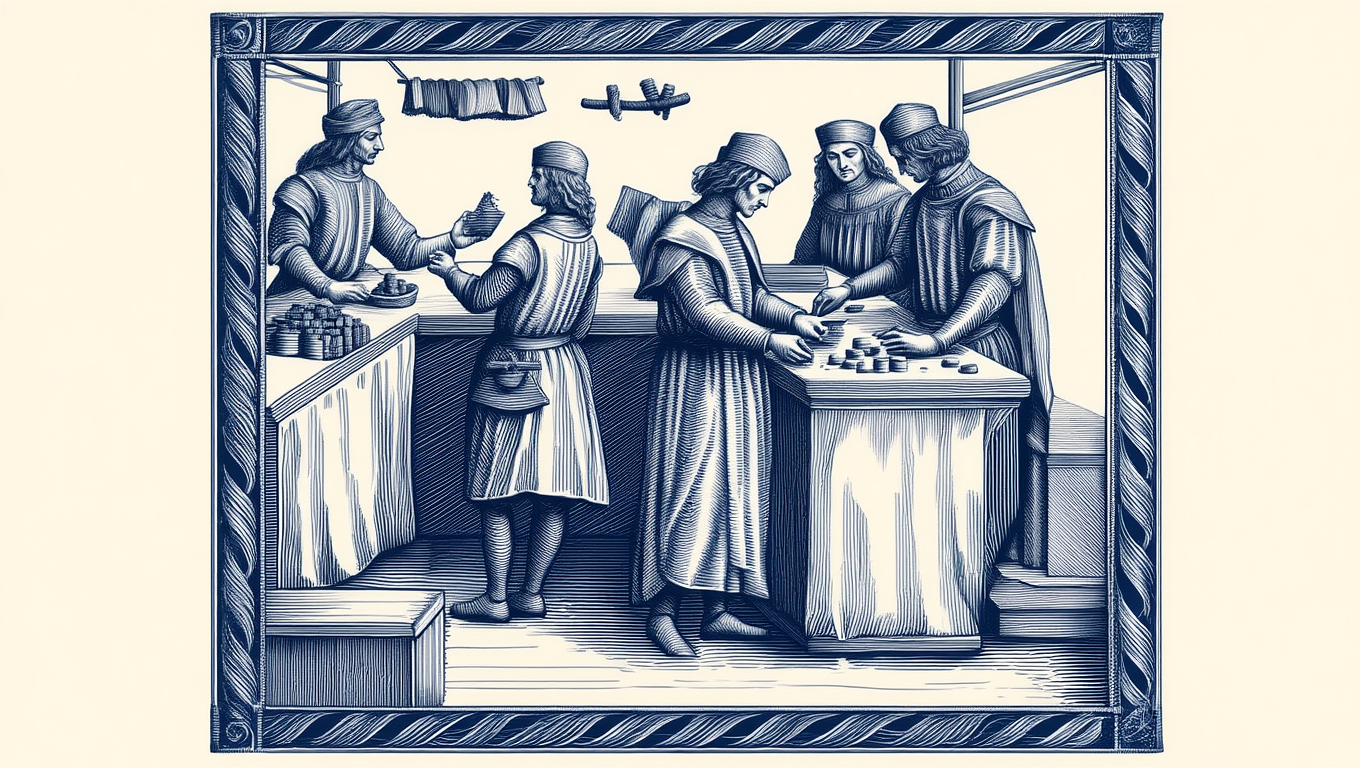 Interior of a bank owned by the Medici family of Florence. Woodcut, Italian, 15th century
In 15th-century Florence, the Medici Bank solved a problem that had been constraining commerce for centuries: how do you move currency without physically moving gold?
Their answer was the bill of exchange — a signed letter that could transfer value across Europe. One merchant in Florence writes instructions. A merchant in Bruges receives payment. Money began to travel at the speed of a messenger's horse.
Through our computers, we can think at the speed of silicon. But our transacting speed is still closer to the 15th-century Florentines than it should be, because traditional rails weren't built for machines. Credit cards and bank accounts require human authentication. PayPal freezes accounts that exhibit "bot-like behavior." The entire financial system assumes a human is pushing the buttons.
This is why crypto is integral to agentic commerce. A crypto wallet can be controlled by software as easily as by a person. The rails exist for machine-to-machine payments in a way they simply don't in traditional finance.
And the companies building this infrastructure — payment APIs for agents, custody solutions for autonomous software, settlement layers that don't require human signatures — are to be the Medici Banks of agentic commerce, building the pipes that autonomous transactions will flow through.
They’re preparing for a Gold Rush.
Selling Shovels
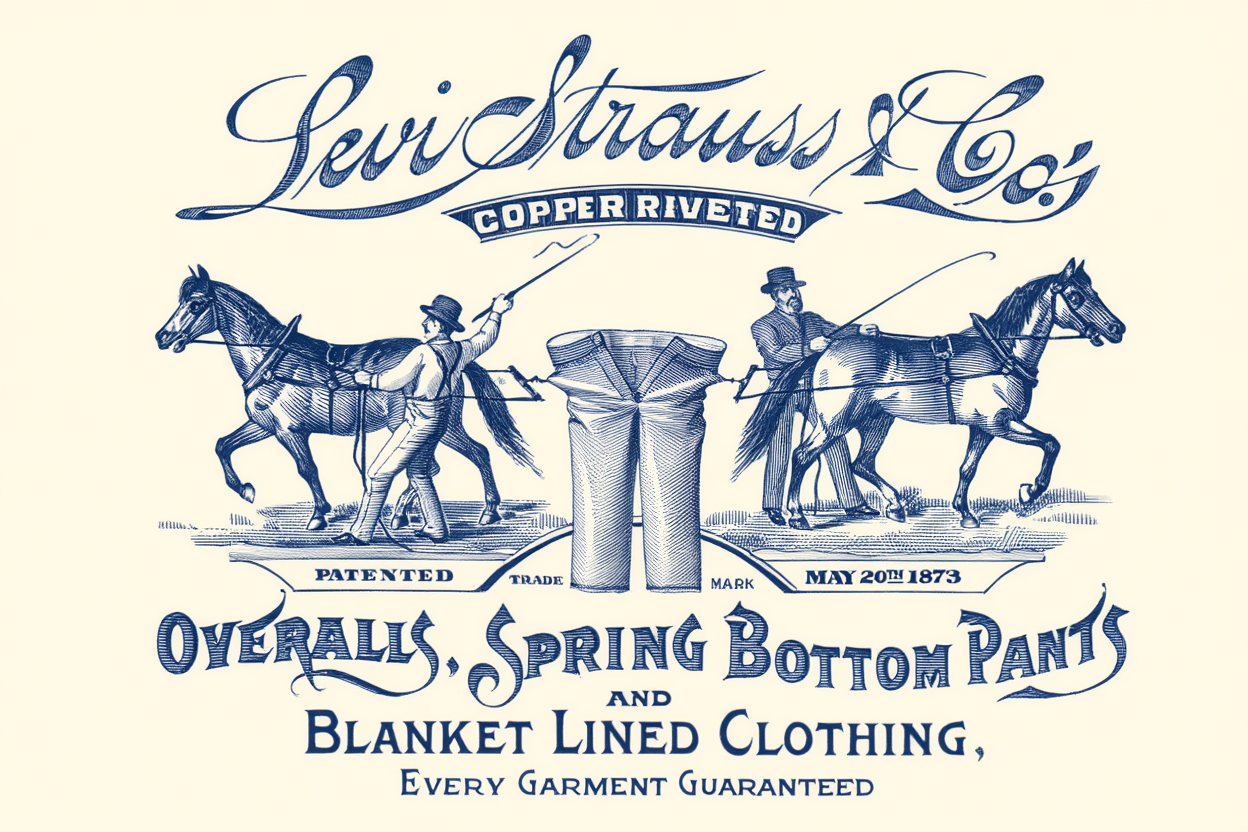 Levi Strauss commercial (1860s)
More people made money during the Gold Rush selling shovels than prospecting for gold.
In 1853, Levi Strauss arrived in San Francisco. He wasn't there to pan for gold — he came to sell supplies to the people who were. When he noticed miners destroying their trousers crawling through riverbeds, he started making denim workwear. The miners gambled on striking it rich. Most went broke. Instead of sifting through the rubble himself, Strauss bet on a certainty: whatever happened, they'd need durable trousers.
So: what do I buy? When autonomous AI businesses become the next "gold panning," - the next template for financial escape - you want exposure to the tools these businesses will use. See below:
- Agent orchestration platforms
The tools that let non-technical users deploy and manage autonomous agents. Think Shopify, but for AI businesses. Whoever wins this layer captures the entire wave.
- Crypto payment infrastructure
The companies building machine-to-machine payment rails. APIs that let agents hold funds, authorize transactions, settle payments.
- Stablecoin issuers and infrastructure
Agents need stable value to operate. They can't run a business with an asset that moves 10% daily. Stablecoin rails — issuance, redemption, on/off ramps — are critical infrastructure.
- Identity and verification for agents
As autonomous software becomes economically significant, the ability to verify "this agent is controlled by this human/entity" becomes valuable. Agent identity infrastructure is nascent but coming.
- Compute and inference providers
Agents need to think. The companies providing cheap, fast, reliable AI inference will benefit from millions of autonomous agents running 24/7.
The bet cannot be that any individual agent business succeeds. Most will fail, just like most gold miners went home empty-handed. My bet is that as the phenomenon grows, and millions of people attempt to build autonomous income streams, that the infrastructure providers take rake on all of it.
Conclusion: The Loom Always Wins
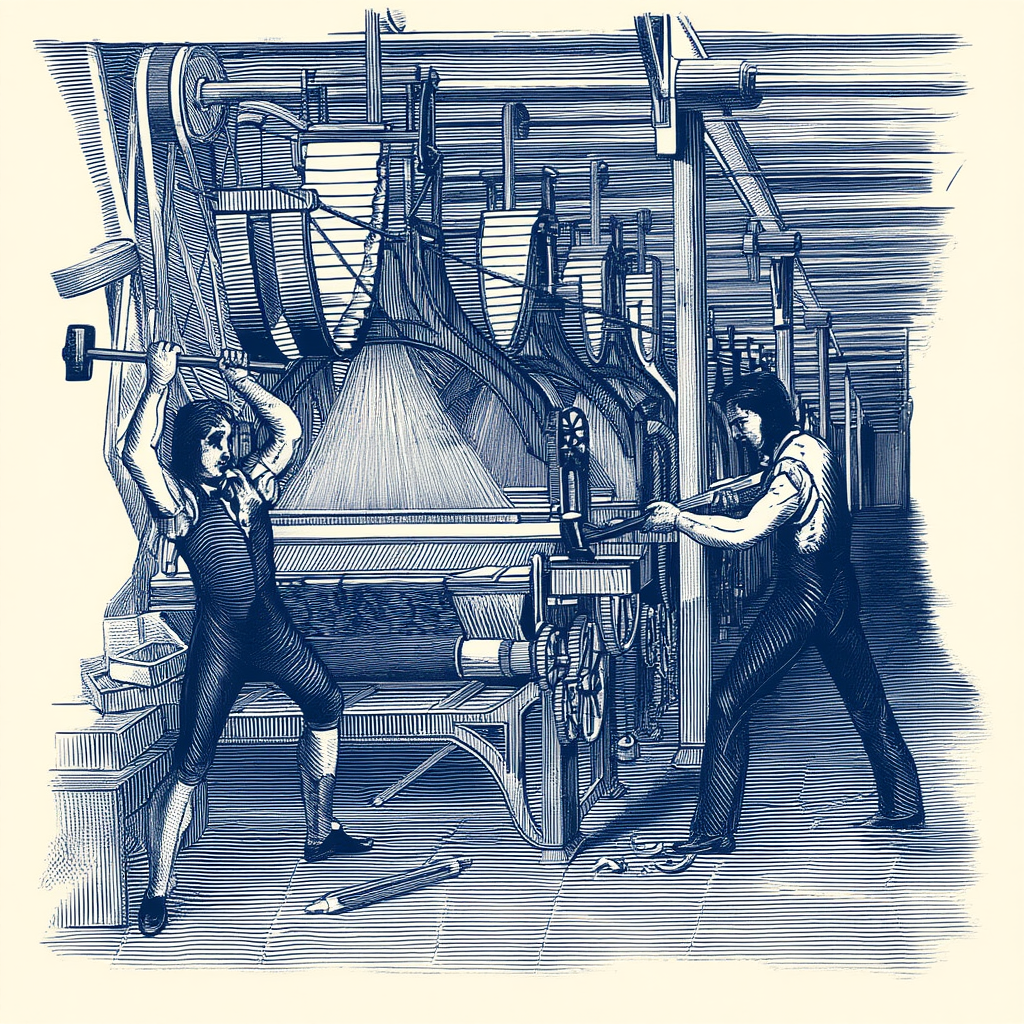 Frame-breakers, or Luddites, smash a loom, 1812 (engraving)
I began this article by asking whether AI made you fear for your job. There likely will be a comprehensive overhaul of our workforce as a result of the technology I’ve touched on above. But that need not be a cause for worry.
In 1811, textile workers in Northern England began smashing mechanical looms. We remember them as the Luddites — shorthand now for irrational technophobia. But they weren't stupid. They saw clearly that the machines worked harder, better, faster, and cheaper, rendering skilled weavers’ lifetimes of craft worthless in real-time. They saw the future: one that didn't include them.
I should be honest about what agentic commerce means.
If it works, and people really can spin up autonomous businesses that generate income without ongoing labor, then it's going to be chaotic. The same forces that made dropshipping a race to the bottom might apply here. Agents can iterate at machine speed. They'll find - and exhaust - opportunities faster than humans ever could.
Early movers will make money. The infrastructure providers will make money. The masses who pile in after the gold rush is over will mostly be left holding the bag, as always.
And the economic disruption will be real, because with agents completing service work autonomously, what happens to the millions of freelancers currently doing that work? If agents can arbitrage markets continuously, what happens to the humans who do that for a living? The Luddites asked the same questions about the loom. They were right to worry, but being right didn't save them.
There's also the question of societal ramifications when income fully decouples from labor. When we can deploy capital in the form of software that works on our behalf, the gap between those with and without capital could accelerate dramatically. The person who deploys 100 agents doesn't work 100x harder than the person who deploys one. They just had more resources to start with.
I don't have clean answers - the technology is coming regardless. The economic incentives are too strong, the capabilities advancing too fast, the demand for escape too desperate.
Understanding what's happening at least lets you position for change. We know the job market is teetering; we know we want passive income; we know agentic commerce is inbound. But any fool can know; the point is to understand. By considering the needs - from wallets to rails - of our soon-to-be-indispensable AI agents, we can shape them into the magic tools that Aristotle envisioned over two millennia ago.
Long Agents with Wallets.